Dev Docs - Introductions
A small introduction to the project.
Table of contents:
0. How does it work?
As said, Contagion is about viruses and malwares. It's also about a lore.
In Contagion, all members plays as an instance of YOU,
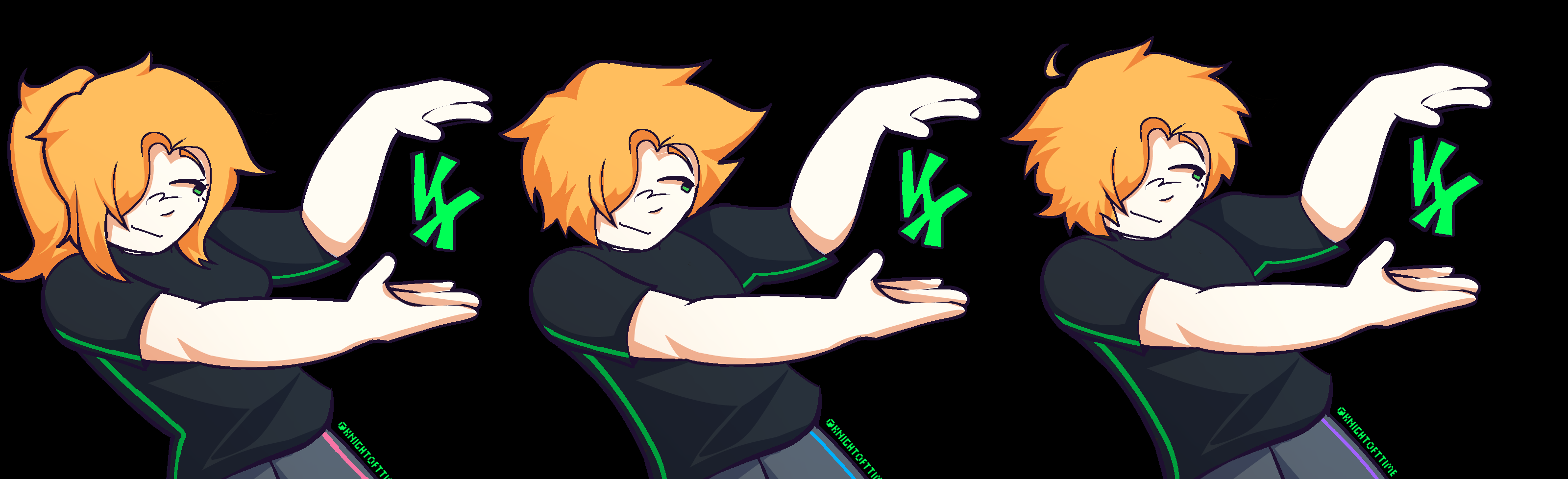
All instances of "YOU".
'You' is a core program virus worm[1] present into VX Computer, enabling users to execute that program.
The special ability of 'You' is to enable the user to choose their next target. Here, the next target will be user's computer.
'You' can then help the user to get out of VX's Computer.
To process the request, 'You' has access to /VirtualComputer/, meaning they can have a PC! But, this PC they have (the one the user start with) is weak, and lacks power.
Is has dead pixels, keyboard is hard to use, and the system is laggy. Users won't hack the Decagon with this…
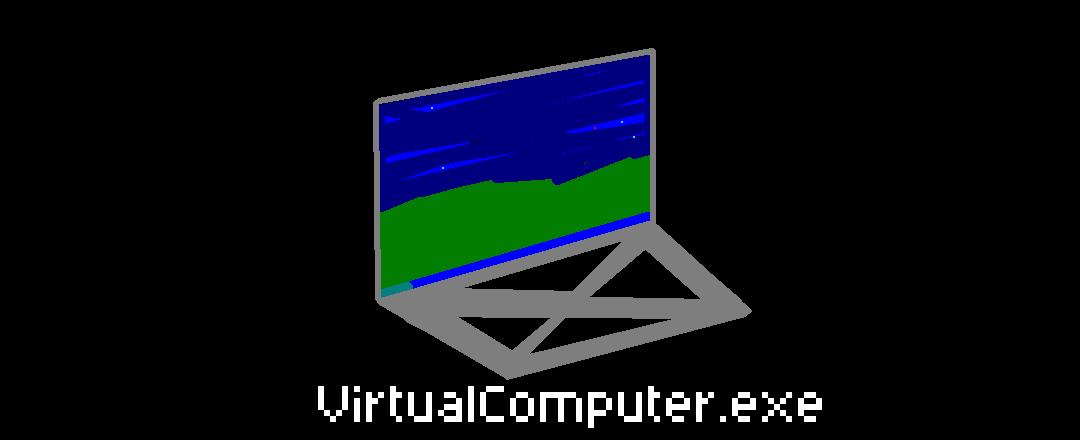
The Virtual Computer program, at level I.
Good news is: This computer can be upgraded!
1. The Virtual Computer
The Virtual Computer or VCom is used to create and use a computer inside a computer.
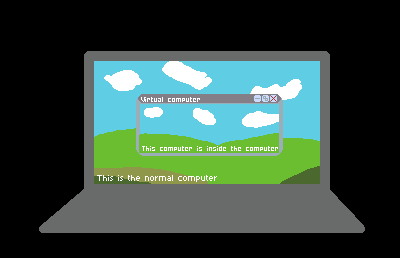
Rough explaination of what a virtual computer is.
In our case, 'You' is using this to search for user's computer. But, as I said above: This computer is sù%.*
This computer can be upgraded in various ways:
1. 'Finding Viruses signatures'
The first way to get money is through the Bug Hunting Program: it will reward you a few Cookies for each signature you can find!
To explain correctly:
EVERY files on your computer has what we call a “Hash”. It's like Discord ID, but bigger: it is used to recognize files.
Like I said, each files in your computer has one, INCLUDING VIRUSES. This is one of the way antivirus knows who's a virus or not: scanning Hashes.For exemple: here's the SHA-256 (AKA: the hash) of the famous trojan
Wannacry:ed492db95034ca288dd52df88e3ce3ec7b146ffd854a394ac187f0553ef966d9If your antivirus finds a hash like this, it means one of your files hides Wannacry.
Here's how it works in Contagion
then the command /hash scan will be executed, a randomly generated hash will be generated. Depending on the level of your /VirtualComputer/, the command will also give you much information about this hash.
Your goal will be to determine if it's a virus or not. If it is, you successfully capture the hash and submit it to AVU, meaning you will win Cookies. If not, that ok, don't fret.
Users will be able to see which virus hashes they claimed with the /hash inventory <user> command.
More globally, users can check any hashes at any moment with /hash info {Hash}.
You can get more info on /hash command by clicking here: Hash commands
2. Doing various tasks on your VCom.
To get more Cookies, users can perform some little things in their Virtual Computer to give them a little boost and a little Cookies reward.
a. Memory Defragmentation.
To explain correctly:
Files on a hard disk drive aren't always stored in one continuous location. Instead, the operating system stores file fragments wherever free space is available. Over time, as files are created, modified, and deleted, this leads to fragmentation.
Here is what fragmentation look like:
▮▮▮▮▮▮▮▮▮▮
▮▮▮▮▮▮▮▮▮▮
▮▮▮▮▮▮▮▮▮▮
▮▮▮▮▮▮▮▮▮▮
As you can see, both files are scattered throughout the drive. When accessing these files, the hard drive's read/write head must jump to multiple physical locations, slowing down performance.This is where Defragmentation saves the day!
▮▮▮▮▮▮▮▮▮▮
▮▮▮▮▮▮▮▮▮▮
▮▮▮▮▮▮▮▮▮▮
▮▮▮▮▮▮▮▮▮▮
Now each file is stored in one continuous block, allowing faster access since the read/write head doesn't need to jump around.
WORK IN PROGRESS
a malicious program that replicates itself, automatically spreading through a network. ↩︎